
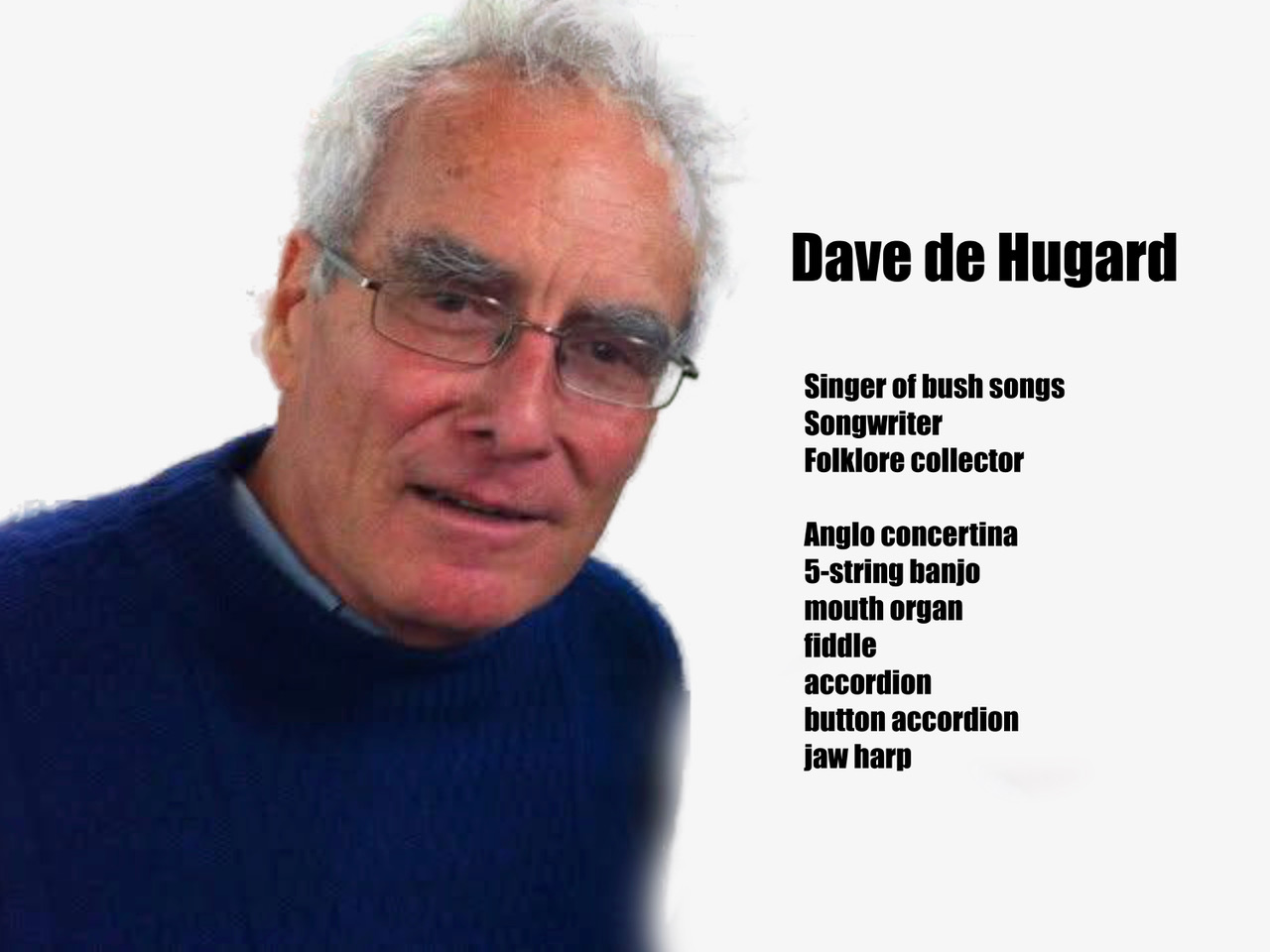
Folk songs often reveal a great deal about the emotional history of a country and, in many ways, are good signposts of our journey through the years. Some are poems turned into songs, some are adaptations of older songs, some can be attributed to specific writers, and most are anonymous creations that were circulated orally among singers. Whatever their credentials, the majority of folk songs in the Australian context tell about life’s aspirations, frustrations, pains and pleasures. The songs in this collection come from various directions and have been strongly influenced by Dave de Hugard’s lifelong association with Australian storytelling and music-making. Dave is a natural singer and musician. He sings from the heart. This is not your usual collection of bush songs, for these songs and tunes have travelled down the years and have been re-fashioned in Dave’s unique and sympathetic style. They have also been influenced by some of the people he recorded for his oral history collection at the National Library of Australia. Above all, these long-awaited recordings set a new benchmark in how we perceive the role of old bush songs and dance tunes, as they provide evidence that everything old is new again, and folk music creativity knows no boundaries.
(Warren Fahey, Rouseabout Records)
Dave de Hugard (b.Queensland, 1942) has been a prominent figure in Australian folk music for over sixty years as a singer, musician, and folklore collector. He is undoubtedly one of the leading interpreters of the old bush music repertoire, with an intuitive approach to storytelling and musical performance. Dave became interested in folk music in the early 1960s. Inquisitive, he wanted to learn more about the music’s origins, especially those who had included the old songs and tunes in their repertoire. He became adept at playing several musical instruments, including the Anglo-German concertina, button accordion, banjo, mouth organ, 5-string banjo and fiddle.
A pharmacist by profession, he also obtained a degree in social anthropology from Macquarie University, solidifying his academic foundation in folklore. He worked as a folklore collector and researcher, diligently preserving the essence of Australian bush music.
Several tunes in his extensive repertoire were learnt first-hand from older players. His folklore collection is housed at the National Library of Australia https://catalogue.nla.gov.au/catalog/715971. He lives in Castlemaine, Victoria, Australia.
Dave has recorded several landmark albums, including his debut album ‘Freedom on the Wallaby’ in 1970. In 2025, he recorded a series of video films demonstrating Australian bush dance music played on the Anglo-German concertina. Dave introduces each film with stories and information on the tunes’ source and traditional travels. The series was filmed and edited by Bill Buttler and Trevor Voake of the Victorian Folk Music Club and produced by Warren Fahey for posterity! They will be released on YouTube in 2026.
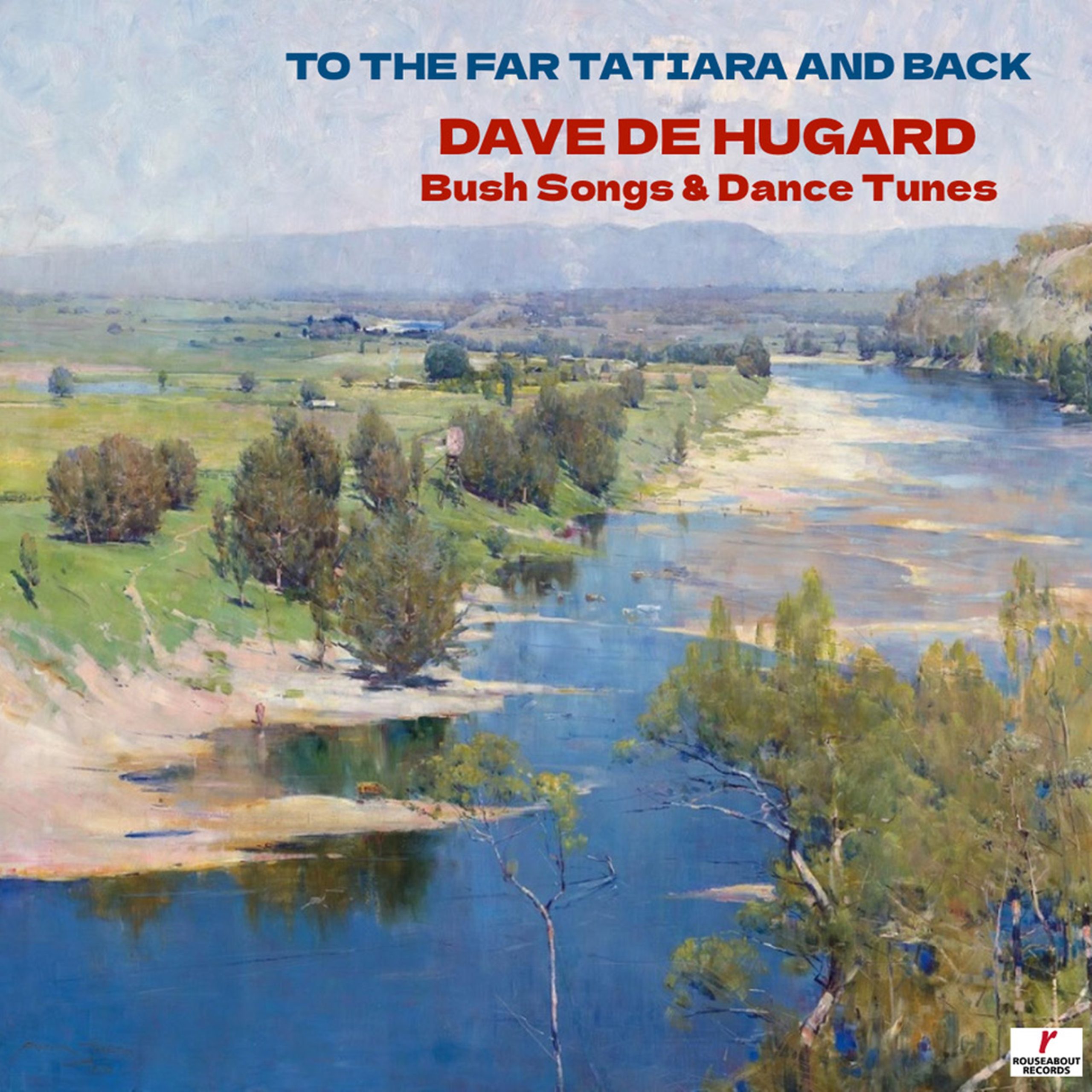
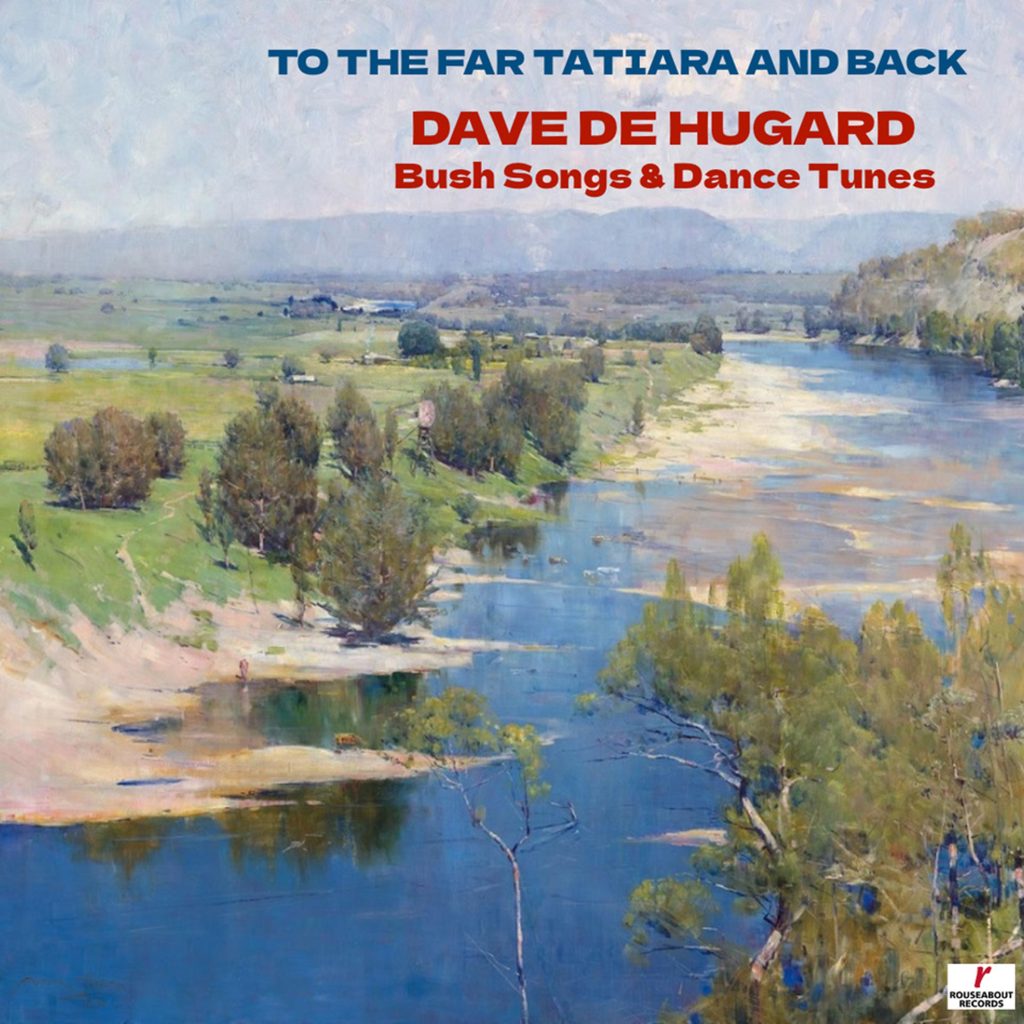
‘To the Far Tatiara and Back’ – Arthur Streeton, ‘The purple noon’s transparent might’ 1896, oil on canvas, National Gallery of Victoria, Melbourne.
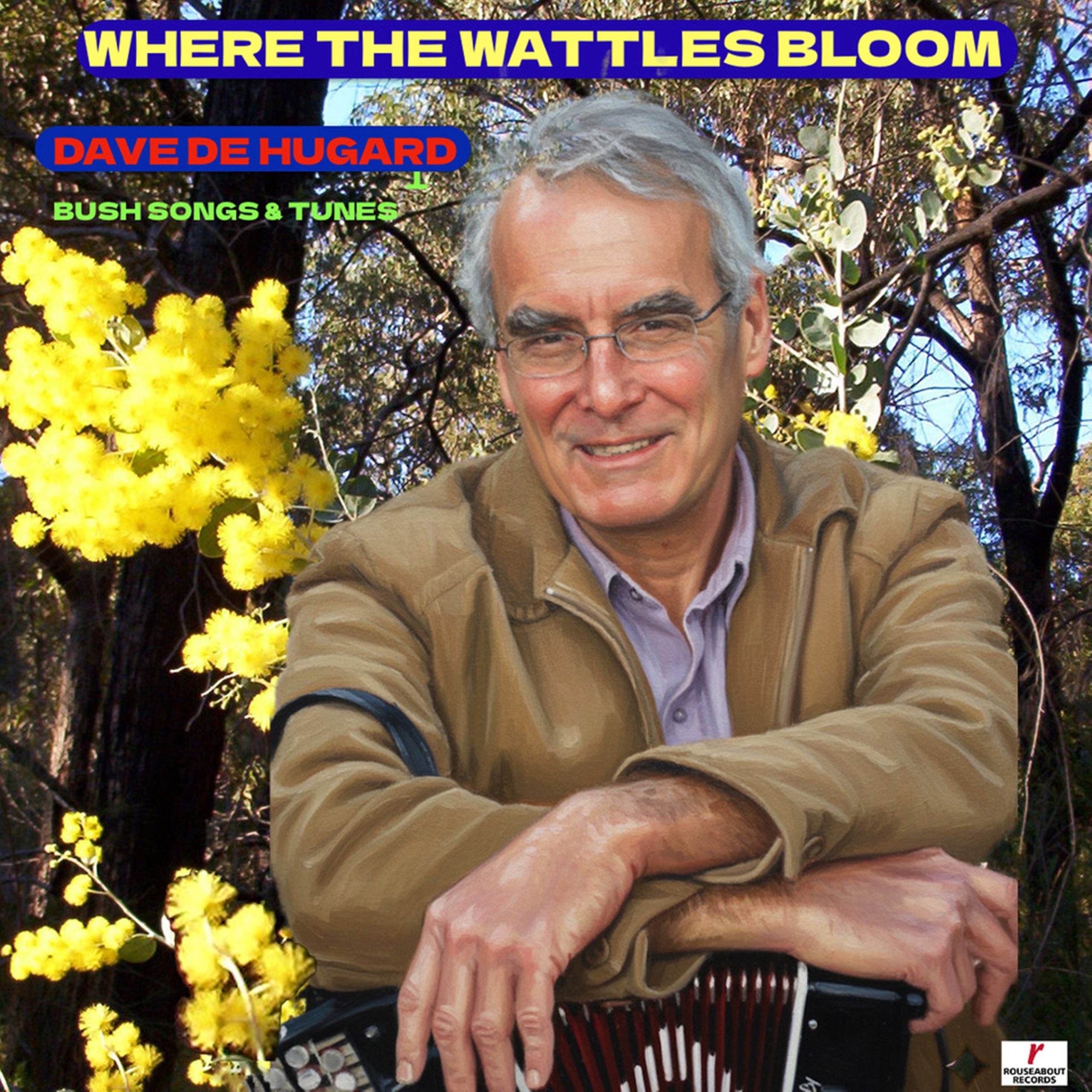
‘Where the Wattles Bloom’ – Manipulated photograph using Claude Ai.
Catalogue Number RRR131
Track Listing:
This bush song comes from Mary Byrnes (born 1881). Mary learnt her songs from itinerant workers who passed through the farm in the village of Springfield, out of Orange:
'The cook he does the highland fling to the roo-talli-too-talli-toot
Of Billy the boy from Burraway, who plays upon the flute.'
A good mob of shearers at this shed, it must have been – and a few Scots among 'em too!
Dave de Hugard with the River Bend Band
I joined Kath McCaughey (1901-1989) in many musical sessions in Kath's kitchen, up in Grafton, with Kath playing her 'old music' as she called it, on her button box, and myself playing the fiddle or concertina. And the kettle was ever ready to go on the boil for a 'cuppa' and a good yarn from Kath about the old days.
I met Stan Treacy (1900 – 1990) when I landed a job in Crookwell in 1981. Stan was one of the great old-time fiddlers. And on many a freezing Crookwell evening, for a good tune and a yarn, Stan's warm kitchen was the place to go.
Dave de Hugard: button accordion
Barry McDonald, Bob McInnes, Julie Castles: fiddles
Recorded by Phil Punch, Electric Avenue Studios, Balmain.
Lawson was in Bourke in late 1892 and 1893. The pub, in those days called 'The Carrier's Arms', was still running in the 1980s. I had a beer there and thought about Lawson, sitting close by, putting his lines together - the Salvo's outside, banging on the drum, the Lassies singing 'Shall We Gather at the River', shaking their tambourines and praying for Watty, and Watty himself, comfortably seated on the corner footpath enjoying the show. The verses are from his poem 'When the Army Prays for Watty’. I don't think Henry would mind at all if we joined him in the bar for this one. So let's do that now and share with him in the whole colourful event!
Dave de Hugard with the River Bend Band
I first heard a version of this song, 'The Wallaby Track', from the colourful character, squeeze-box player, and yarner Basil Cosgrove, in Armidale in 1970. Later on, I came across a version from Ron Mackay, who had picked up the song in the Cloncurry area circa 1933. This song, I call 'Springtime on the Wallaby', is how those earlier influences have all come together. Kate Burke adds a special contribution to this one. It's a good yarn with a bit of romance on the Wallaby Track as well!
Dave de Hugard: vocals, accordion, concertina, 5-string banjo
Kate Burke: vocals
In the 1937 film 'Captains Courageous', Spencer Tracy as Manuel, plays a hurdy-gurdy and sings a song about a little fish, 'Yeo Ho Little Fish Don't Cry Don't Cry'. I discovered that Manuel's song actually draws on two parts of the tune of a Catalan Christmas Nativity Lullaby, 'El Noi de la Mare'. I've drawn on that same tune in this version and also integrated various collected Australian verses into the story. Kate Burke makes a very positive contribution to the song. And the result at the end of the day is this intriguing and rather quite moving song, I call 'A Song and a Sigh for a Little Fish’.
Dave de Hugard: piano accordion, button accordion, 5-string banjo
Kate Burke: vocals
This haunting melody comes from Lawrie Cobley, a fiddler whom I was fortunate enough to meet where he lived, on the old Glen Innes Road out of Grafton in the 1990s. Lawrie had worked with timber and had also been a stockman in the Marengo area, west of Dorrigo. He learnt most of his tunes from his uncle, Billy Maskey, one of the great old fiddlers from Razorback, out of Newton Boyd. A couple of fiddles, a mouth organ and a banjo have come together very nicely in this rendition. This tune reappears later on, in a track called 'Watching Cattle at Night’.
Dave de Hugard: 5-string banjo, fiddle, mouth organ, accordion
This is one of the old droving songs, with verses penned by a stockman, A.W. Davis (born 1870). He would have been working as a stockman in the late 1890s in the Mitchell area of Qld. This was one of my favourite songs years ago, when I first realised that we had our own rich tradition of bush songs and traditional music. In those days, we sang it to the tune of 'The Little Old Log Cabin in the Lane'. But it was also sung to the tune of a fairly well-known children's song, 'Little Sally Waters' – and that's the version we have here.
Dave de Hugard: vocal, concertina, mouth organ, accordion, jaw harp
I came across two verses and a chorus called 'Blackfish: a Swagman's Song', in a Ron Edwards’ Ram Skull Press publication, ‘Australian Folk Song’. I liked the verses – so much so, that I decided to join the swagman at his cosy little camp among the wattles, and see how the day would unfold. 'Three Little Black Fish', is the result. The tune just came into being while I was there.
Dave de Hugard: vocal, 5-string banjo, accordion, concertina
The first tune is from Dooley Chapman (1892-1982), the concertina player from Dunedoo. Dooley had some wonderful tunes, and he was still playing well when I met him in the early 1980s. He played a John Stanley, Australian-made concertina. Part of the second tune that I call 'The Bunyip Polka, is drawn from another of Dooley's tunes that he called 'Dressed in Rags Without a Bob'.
Dave de Hugard: button accordion
Barry McDonald, Bob McInnes, Julie Castles: fiddles
Wayne Richmond: piano
Recorded by Phil Punch, Electric Avenue Studios, Balmain.
This also known as 'The Holiday Song'. Two verses and a tune came from the fiddler Joe Yates of Sofala in 1983. Joe had learnt the song from his mother. She said they used to sing it at school. A more complete version, but with just verses, came from Susan Colley in Bathurst. This version combines Joe's tune with the lyrics of Susan Colley.
Dave de Hugard: vocal, concertina
Graham Dodsworth: guitar
I met Jack Nicholes in Tumut in 1971. Jack would eventually share many a yarn about his varied working life in South West Queensland before the war - including this droving story about watching cattle at night. Lawrie Cobley's 'Cattle Lullaby' is playing quietly in the background.
Dave de Hugard: vocal, 5-string banjo, fiddle, mouth organ, accordion
I put 'The Gumtree Lullaby' together for a very young daughter many years ago.
Dave de Hugard: vocal, 5-string banjo
Bill Woolard: guitar
These two verses from C.J. Dennis are a picture of simplicity itself – three kids on a horse passing by on their way to school and the same three kids coming back from school in the afternoon...'G'day, Mr Dennis!'...G'day, kids!' Dennis was clearly captured by this event, just as his verse captured me. He called it 'Going to School'. I put a tune to the verses and have ended up just calling it 'Three Kids on a Horse'. Kate Burke joins me in this very pleasant little song.
Dave de Hugard: vocal, piano accordion, button accordion, 5-string banjo
Kate Burke: vocal
These are two really nice waltzes that were passed on to me from my old friend Kath McCaughey (1901 – 1989) from Grafton.
Kath said 'Blondin's Waltz' was the tune the famous tight-rope walker, Blondin, played on a violin as he walked across Niagara Falls. The first part of Kath's tune reminds me of the tune of 'The Lorelai'. 'The Lorelai' in a German folk song is a siren who tries to draw sailors onto the rocks at a dangerous bend on the river Rhine. If there is anything in this possible tune connection, I'd say that Blondin might have been issuing a challenge of sorts to the Lorelai - something like, 'Here I am Lorelai. And what are you going to do about it!' Blondin toured Australia in 1874.
'The Cuckoo Waltz' came from Kath's grandmother, Mary-Anne Monaghan, who played it on the concertina. It's a nice three-part waltz, too. I did some exploring, and it turns out it comes from a song called 'Emmet's Cuckoo Song', composed by J.K. Emmet in 1878 for a play. I also found the tune on a wax cylinder recording and on an early 78 record as well. The tune certainly got around among the traditional players. Ernie Wells (fiddle & concertina) from Burrell Creek and Joe Cashmere (fiddle) from Booligal and Bert Cooper (button accordion) up on the Bulga Plateau, all played their own interesting versions.
Dave de Hugard: concertina, mouth organ, button accordion, 5-string banjo
This is a version inspired by the widely known 'The Drover's Dream'. It first appeared as 'Visions of a Night Watch' in a South Australian newspaper in 1889. It has continued to appear regularly throughout the years. It even made it onto the hit parade in 1955 with Alan Scott doing the singing, backed by members of the Sydney Bush Music Club. It's a great song, and for me, it has always been a favourite.
Dave de Hugard: vocal, button accordion, concertina, 5-string banjo
The song, 'Lamp Lighting Time in the Valley' appeared in 1933, and it must have made quite an impression, because it was quickly followed up by several other versions, all drawing on the same tune, culminating with Lucille Starr's very popular 'The French Song' in 1976:
'When the sun says good day to the mountains
And the moon says hello to the dawn...'
I heard the tune first from George Brewer at the Vancouver Folk Festival in 1989. George said it was the tune of a Swedish song the local Swedish community radio used to play. It was a good tune, and I took it with me in my memory on a trek soon after, hitchhiking through the Rockies – but no matter how much I tried, I couldn't accurately remember the second part. And somewhere between Banff and Jasper, this version of the tune that I now call 'Lamp Lighting in the Rockies’, came into being.
Dave de Hugard: piano accordion
Bob McInnes: fiddle.
Recorded by Phil Punch, Electric Avenue Studio, Balmain.
This is a story about a swagman and his dog, and it comes from Henry Lawson. Chris Kempster put the tune to it. Chris was a Lawson enthusiast, and he really did come up with some excellent tunes for any number of Lawson poems. In 1989, he published a book with over 100 Lawson poems that he and others had set to music, 'The Songs of Henry Lawson'. At the end of the day, I think it can be said that Chris played no small part in keeping Lawson's poetry alive in modern-day Australia.
Shearers don't shear wet sheep. It's been hard going apparently for this mob of shearers, and that's why they appear to be so keenly waiting for some rain. And it just so happens that good fortune does come their way:
'The sky is clouding over, the thunder's muttering loud,
The clouds are driving westward o'er the plain.
I see the lightning flashing followed by an awful crash,
And we hear the gentle patter of the rain.'
This really is one of the good songs. It comes from John Neilson senior and was published in The Border Watch (Mt Gambier, SA) in 1878. John Shaw Neilson, the renowned poet, was his son.
Neilson left a note beside the poem saying that it would go well with the tune of 'The Little Old Log Cabin in Lane'. And that's just the tune we've got going here. Yes indeed, a good song – good to hear and good to sing!
Dave de Hugard: vocal, concertina
Ian White: 5-string banjo
Bill Moynahan: Guitar
Ken Greenhaugh, tin whistle
Tom Rummery, button accordion
'Hey Rain' is another of the really good songs. And it comes from Bill Scott (1923 – 2005). Bill was a folklorist, an author, a poet, a songwriter, and a skilled storyteller. He was also a good friend. And I reckon if you really like a good yarn and can find a copy, 'Tough in the Old Days' is the way to go. It's Bill's autobiography, really. There are any number of adventures...looking for gold, cutting cane in North Queensland...you name it, and all brilliantly told. Bill was awarded an O.A.M. in 1992 for his contributions to Australian folklore. ABC Radio’s ‘Australia All Over’ helped make the song a minor hit.
Dave de Hugard: vocal, piano accordion
Catalogue Number RRR132
Track Listing:
'When Bertha comes to tea, the kettle sings with glee...'. This is the opening line of a poem Henry Lawson wrote for his little daughter Bertha (1900 – 1985). It's a great little poem, and it wasn't long before it acquired a tune. So strap yourselves in and join us on this lively track with accordion, three good fiddlers and some excellent piano and trombone.
'When Bertha comes to tea, the kettle sings with glee
Cups and saucers clatter as you listen to the chatter,
And nothing seems to matter when Bertha comes to tea.’
Dave de Hugard: vocal and piano accordion
Bob McInnes, Barry McDonald and Julie Castles: fiddles
Wayne Richmond: piano
James Greening: trombone
Recorded by Phil Punch, Electric Avenue Studio, Balmain.
Years ago, when the shearing was over, some shearers would shoulder their 'Matildas' and head for the river bend. This is just one of many bush songs about life on the track. The imagery in this song is sheer delight.
'After the shearing is over, it's up with the swag on the back,
With their billies they waltz their Matildas, the men on the Wallaby Track.'
And when Springtime comes, they're off once again, back to the shearing sheds!
'Australia's on the wallaby! Did you hear the Coo-ey!
The Kangaroo, he packs his port, the Emu shoulders bluey.
Lorikeets are whizzing round - the Dingo slings his pack,
And Possum Bear and Bandicoot are trampin' down the track.’
Dave de Hugard: vocal, accordion, concertina, mouth organ and 5-string banjo
This is another yarn I heard from Jack Nicholes, whom I met in Tumut in 1970. Jack had worked outback in South West Queensland before the war. In 1976, I travelled with him back to his old stamping grounds of Charleville, Adavale, Windorah, Jundah and Evora...and as we drove along, Jack was recalling events that had happened while he was there. The tape recorder was on all the time, and this was also real yarning. This story about Hunter of Evora and life during the Depression is Jack's story, verbatim, just as he told it to me. Wikipedia notes that today, Evora has a ‘population of 0’.
Dave de Hugard: vocal with The River Bend Band
'Tom Blackman's Waltz' is the Blackman family adaptation of a waltz Tom Blackman senior acquired from the concertina player Fred Holland of Cook's Gap. Now called 'The Mudgee Waltz’, it is a very popular widely known waltz these days.
'A Starry Night for a Ramble' was a music hall song from the 1870s and remains to this day an ever-popular waltz. It was also known as ‘Kiss and Never Tell’.
'Of all the things that I like best that fill me with delight
It is to take a ramble, upon a starry night.’
This bush song comes from The Queenslander’s New Colonial Campfire Song Book published in 1865. It is possibly the work of George Layou (aka George Chanson), who was a popular songwriter and singer on the New South Wales goldfields. The tune is Henry Bishop’s ‘Mistletoe Bough’. A. B. ‘Banjo’ Paterson included it in his 1905 ‘Old Bush Songs’.
Dave de Hugard: vocals, whistling, 5-string banjo
Recorded at ABC Studios, Sydney
This version of 'The Cockies of Bungaree' comes from the British folklorist and singer, A.L. Lloyd, who picked it up when he was in Australia in the early 1930s. It appeared on his L.P. record 'The Banks of the Condamine' (1957). This particular version comes from Dave's record album 'Freedom on the Wallaby' (1970) and is too good to disappear. The old-time farmers were often referred to as ‘cockies’ because after planting crops, their fields were often taken over by cockatoos looking for an opportunistic meal. It looked as if the farmers were growing cockatoos! Bungaree is in Victoria. Simon McDonald of Cresswick also knew the song and always commented that ‘potato picking was one of the most despised back-busting jobs in the bush.’
Dave de Hugard: vocal
Ian White: 5-string banjo
Bill Moynahan: guitar
Dave Pilley: tea chest bass
Tom Rummery: Button accordion
Itinerant workers and swag carriers of the late nineteenth century often carried some twine and hooks, and fished for cod and blackfish in the then mighty rivers. Simple joys of bush life. The song was first mentioned in The Bulletin Magazine, 1898, implying it had been in circulation for a few years. A. B. ‘Banjo’ Paterson included it in his revised 1937 edition of ‘Old Bush Songs’. Johnny-cakes were a type of flatbread made using cornmeal, salt, and water or milk. They were stomach fillers and often enjoyed with treacle and billy tea.
Dave de Hugard: vocal, concertina
Ken Greenhaugh: flute
A traditional folk song, also known as ‘Good Brown Ale and Tobacco’ or ‘Across the Western Plains’. It was initially popular with sailors and later adopted by folk music performers and pub singers. I recorded this a long time ago, it’s not a bad song actually and still sing it from time to time. It definitely has a ‘parched and thirsty’ feel about it!
Dave de Hugard: vocal, concertina
Ken Greenhaugh: flute
This evocative ballad is the work of Frank MacNamara, a convict widely known as ‘Frank the Poet’. He is also possibly the author of ‘Bold Jack Donahue’. In its original form, it was sarcastically titled ‘The Convict’s Lament for the Death of Captain Logan’ (the infamous controller of the Moreton Bay prison). Some lines of "Moreton Bay" were used by bushranger Ned Kelly in his Jerilderie Letter in 1879. The tune ‘Boulavogue’ works hauntingly beautiful with the combination of cello and accordion.
Dave de Hugard: vocal, piano accordion
Recorded at ABC Sydney Studios
In 1895, Christina MacPherson, with Banjo Paterson nearby, played a version of a Scottish tune, 'Thou Bonnie Wood O' Craigielea'; and to that tune, Paterson wrote the words of 'Waltzing Matilda'. The song quickly caught on. People were singing it everywhere. In 1903, Marie Cowan, for Inglis, the Billy Tea people, altered the words and tune to create the song most of us know today. But this tune, 'Waltzing Matilda in the River Bend', is not Marie Cowan's tune. It is the tune of Christina MacPherson. In my mind's eye, I have three swagmen who have found a good spot along the Lachlan River; they have just put the billy on and are having a tune on a mouth organ and a button accordion, and it just so happens one of them has a 5-string banjo. And they are playing Christina MacPherson's tune, 'Who'll Come a-Waltzing Matilda with Me’.
Dave de Hugard with The River Bend Band
I met Clem in 1977. He played a concertina, and he came from 'Ironbarks' as he called it, now called Stuart Town. His father, Hughie, was a shearer and played a button accordion. This tune, 'Clem O'Neale's Waltz', is just one of the tunes that his father brought back with him on one of his shearing trips.
Dave de Hugard: concertina, button accordion, 5-string banjo
Here are a couple of Mazurkas that came from the accordion playing of Ma Seal (b1901). She came from Kimba in South Australia and was truly, one of the outstanding 2-row button accordion players. She played all of the old dance tunes, waltzes, varsoviennes, mazurkas, schottisches, polkas, quadrille tunes for the lancers and Caledonians...you name it, she played them all – and decoratively, and usually quite fast. Thankfully, all of these tunes were collected by the folklorist John Meredith and Peter Ellis in 1985 and are all available from the Oral History section of the National Library of Australia.
Dave de Hugard: piano accordion, button accordion, 5-string banjo
The poem 'Summer's Comin', sometimes called 'Springtime on the Dawson' is the work of Charles Augustus Flower. He was a squatter and he wrote a stack of good poems about life on his cattle station, Durham Downs, on the Dawson River - good times and hard times. One of his poems, 'The Broken Down Squatter' (pub. 1884), now with a tune attached, is a popular bush song. It opens with a squatter talking to his horse as they are forced to leave their property:
'Come ‘Stumpy’, old man, we must shift while we can.
Your mates in the paddock are dead.
We'll bid our farewells to Glen Eva's fair dells,
And the hills where your master was bred.'
In 1902, Flower himself was forced to leave Durham Downs after four years of ruinous drought. But this poem, 'Summer's Comin', is about much better times. In these three superb verses, with winter gone, Spring energy is everywhere, and Durham Downs is coming to life! It’s Springtime again on the Dawson! A familiar cycle for folks on the land.
Dave de Hugard: vocal, piano accordion, button accordion, 5-string banjo
This is an adaptation of Banjo Paterson's 'Travelling Post Office' (1894). An old man dearly wants to make a connection with his son, and he asks Banjo to write a letter for him. But he hasn't got an address. All he knows is that his son is travelling with a mob of sheep along the Castlereagh River. And what do they do? They decide they'll try sending it 'c/o Conroy's Sheep, Along the Castlereagh':
'Five and twenty thousand sheep can scarcely go astray,
Let's send it care of Conroy's sheep, along the Castlereagh.'
And that's what they do:
'On by lagoons where the wild duck play, and the crested pidgeons flock,
Past old campfires where the drovers rode around the restless stock.
Where the sky's alight with stars at night, the letter makes its way,
Out in that land of lots of time, along the Castlereagh.’
Dave de Hugard: piano accordion, button accordion, 5-string banjo
Kate Burke: vocals
'We like our tea in the morning, by the creek where the tall gum trees stand.
Where the magpies sing in the morning, at home in our own native land.'
These are the opening lines of 'Magpie Morning', about life, living on the banks of a creek:
'We love the seasons, the Summer and Spring and the fire when it's Winter again,
The thrill of the flash of the lightning and crash, of thunder and first drops of rain.
When sleepy-heads fall into bed, the last in turns out the light.
What a wonderful sound, the rain comin' down, on the roof on a rainy night.'
The native land in this song is the land where I live, Australia, and the land I also share with many people from many places. And this song is just about enjoying being at home, wherever that may be:
'To sing with the birds in the morning, by the creek where the tall gum trees stand,
At one with a beautiful morning, in a welcoming, beautiful land.'
Dave de Hugard: vocal, piano accordion, button accordion, 5-string banjo
Kate Burke: vocal
I heard this song from the concertina player, Dooley Chapman (1892-1982), on a visit to Dunnedoo in 1981. It turns out that the tune he uses is that of 'The Mousetrap Man' (1866), a waltz by W. H. Montgomery, a composer of many popular songs and tunes in his own time. It's interesting how some of the old tunes keep turning up.
Dave de Hugard: vocal, mouth organ
Graham Dodsworth: guitar
'Goodbye Katy' comes from the fiddler Joe Cashmere (1872 – 1959). Joe was 85 when he was recorded in 1955 by the folklorist John Meredith. Joe had many good tunes, songs and stories from his time travelling around the country. And all of these are now available from the National Library of Australia.
I recorded the second tune, 'Clem O'Neale's Rainbow Schottische' from my old concertina-playing friend, Clem O'Neale, in 1977. He came from Ironbark, or Stuart Town, as it is known now. It was a tune that Clem got from his father when he returned from a shearing trip 'down river'. Clem's schottische evolved from a tune by Henry Kleber (1816 - 1897) called 'The Rainbow Schottische' (1852). Kleber had a prolific output, producing many good waltzes, schottisches, polkas, and quadrille tunes. He was also a good friend of Stephen Foster, one of the great composers of catchy songs and tunes.
Dave de Hugard: piano accordion, concertina, 5-string banjo, fiddle, mouth organ, button accordion